

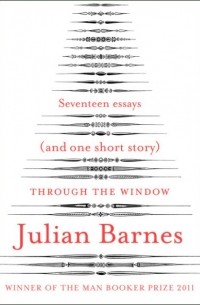
 Ваша оценка
Цитаты
 Аноним21 октября 2017 г.
" На этой земле есть только два рая - Прованс и читальный зал Британского музея".
020- Аноним21 октября 2017 г.
"Форд, со свойственной ему безаппелляциозностью, убедил Джеймса Джойса буквально в том, что " главная обязанность вина - быть красеым".
016  Аноним5 марта 2017 г.
A friend whose long-term lover had died of Aids told me, ‘There’s only one upside to this thing: you can do what you fucking well like.’ The trouble is, that when you are in sorrow, most notions of ‘what you like’ will contain the presence of your lost love and the impossible demand that the laws of the universe be repealed.
04- Аноним5 марта 2017 г.
Most of the grief-struck suffer – especially in the first months – from a terror of forgetting their lost one. Often the shock of death wipes out the memory of earlier times, and there is a morbid fear that it will never be recovered: that the lost one will now be twice lost, twice killed.
03 - Аноним5 марта 2017 г.
But good jokes are the sign of a certain control over the world, or at least of a settled vision, the sort of vision a writer has. Good jokes are finally just jokes; whereas bad jokes are more revelatory of character and situation.
03 - Аноним5 марта 2017 г.
Novels consist of words, evenly and democratically spaced; though some may acquire higher social rank by italicisation or capitalisation. In most novels, this democracy spreads wider: every word is as important as every other word. In better novels, certain words have higher specific gravity than other words. This is something the better novelist does not draw attention to, but lets the better reader discover.
011 - Аноним5 марта 2017 г.
Even punctuations have different weights: thus the English exclamation mark is shoutier than the French.
02 - Аноним5 марта 2017 г.Читать далее
A translation can’t be read before the period in which it is written: this is both obvious, and a kind of brute annoyance. And it can’t – or at least, shouldn’t – be written in a pastiche of the original work’s period. It must be written for the contemporary reader, yet give that reader the same, or a similar, ease or difficulty as an original reader would have had. And just as there can be delinquent looseness, so there can be misguided over-accuracy. It is very difficult to suggest (except in footnotes and introduction) the general literary context in which a book is written, which is central to the writer. Books are often written against – against romanticism, against authorial ego and intervention, against the notion that some themes are ‘higher’ than others.
03 - Аноним5 марта 2017 г.
The first translation we read of a classic novel, like the first recording we hear of a piece of classical music, ‘is’ and remains that novel, that symphony. Subsequent interpreters may have a better grasp of the language, or play the piece on period instruments, but that initial version always takes some shifting.
09 - Аноним5 марта 2017 г.Читать далее
The general trend of translation over the last century and more has been away from smoothness and towards authenticity, away from a reorganising interpretativeness which aims for the flow of English prose, towards a close-reading fidelity – enjoy those tannins! – which seeks to echo the original language. We no longer use the verb ‘to English’ – it sounds proprietorial, even imperialist – but when Flaubert was first being translated it was still in use: thus the first London and New York edition of Salammbô – published in 1886, the same year as Marx-Aveling’s Madame Bovary – is described on its title page as having been ‘Englished’ by (wait for it) ‘M. French Sheldon’.
07