
History. Историческая и околоисторическая подборка.
Estee
- 729 книг

Ваша оценка
Ваша оценка
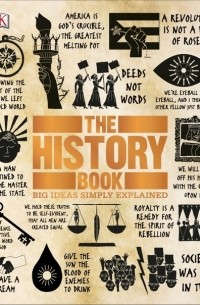
У этой книги есть один существенный минус - он же её главный плюс, я считаю. Она невероятно концентрированная. Она подает просто какое-то нереальное количество информации - поэтому читала я её долго, мне постоянно нужна была передышка и время на переваривать информацию, имена, страны, причины, события.
Книга разбита на несколько больших разделов - по стандартной исторической периодизации, я так понимаю. И в каждом разделе множество небольших глав, обычно по две страницы, посвященных тому или иному событию. Плюсом идут схемы причин / следствий, в каждой главе указана пара ключевых событий до и после основного фокуса. Вставлены рамки с краткими биографиями важных персон. В начале раздела есть timeline, как все события соотнесены по времени. В конце раздела отдельная глава, где упомянуты ещё важные моменты, хотя бы одним абзацем.
Ну и плюс ко всему, книга не ограничивается историей Европы. Тут и Китай, и Япония, и Индия, и Турция, и прочее, прочее, прочее. В общем, шикарно.

Despite an agreement reached at the capitulation of Granada, which contained guarantees for freedom of worship, in 1502 the monarchs decreed that any Muslims over the age of 14 who refused to convert to Christianity must leave Spain within 11 weeks. This edict, combined with the expulsion of the large Jewish community in Granada 10 years earlier, left Spain a more homogeneous and less tolerant place, and the crusading impulse, now shorn of obvious targets, would have to find other channels.

Qing China became immensely powerful during the reigns of the next two emperors—Yongzheng (1722–35), who also kept a tight control on government and the bureaucracy and increased state revenues by reforming the tax system, and Qianlong (1735–96), under whom the empire’s borders reached their greatest extent and the population boomed. Qianlong was an avid patron of the arts who wrote poetry and sponsored literary projects that enhanced his people’s reputation—although at the same time, he banned or destroyed books that were judged to be anti-Qing.

Although Europe was now permanently divided into states that were predominantly Catholic or predominantly Protestant, they had agreed to learn to coexist with one another. The Peace set the precedent of creating agreements between nations by means of high-level diplomatic meetings, the like of which have played a key part in international relations ever since.