

 Ваша оценка
Цитаты
 Аноним2 июня 2015 г.
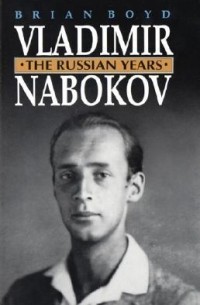
By now the Russian Berlin concentrated around the Wilmersdorf area had become the cultural hub of the whole emigration. V. D. Nabokov was editor of the city's main Russian daily, at the head of one of its two main publishing firms, a participant in cultural and political publications and discussions
37 Аноним6 декабря 2011 г.Читать далее
Читать Набокова — это все равно что сидеть в комнате, откуда открывается некий вид, который почему-то кажется нам миражом, словно бы хитро подмигивающим на солнце и заманивающим к себе. Некоторые читатели опасаются, что их выманивают из дома только для того, чтобы подставить ножку на пороге. На самом же деле Набоков хочет, чтобы хороший читатель, переступив через порог, попал в этот мир и насладился его подробной реальностью. Хороший же ПЕРЕчитыватель, который не боится идти дальше, находит еще одну дверь, скрытую в том, что прежде казалось незыблемым пейзажем, — дверь в иной, запредельный мир.
3142- Аноним21 августа 2015 г.Читать далее
UNCERTAIN of his English in The Real Life of Sebastian Knight, Nabokov in January 1939 asked his friend Lucie Leon Noel to check his manuscript for solecisms. She recalls: Volodia started coming over several afternoons a week, around 3 p.m. He was always on time. He was most anxious that this first novel in English should sound neither "foreign" nor read as though it had been translated into English. We both sat at the large mahogany desk and worked for several hours each time.That mahogany table was the one at which for twelve years Paul Leon had worked with Joyce on Finnegans Wake: an apostolic succession for our times!
27 - Аноним21 августа 2015 г.
The Real Life of Sebastian Knight is a novel about the inaccessibility of the past.
...
English author who ultimately cannot cut his Russian heartstrings, V. must himself become an English writer against his will. In his first English novel, knowing he will have to set Russian fiction aside, Nabokov distances the agony of that sacrifice into art—but lets us glimpse what his forswearing his language and heritage will cost him.25 - Аноним21 августа 2015 г.
Nabokov wrote to the journalist Lolly Lvov of his "ghastly destitution." His cry for help was heard by Sergey Rachmaninov, who, although he had never met Nabokov, had long been a Sirin fan and promptly cabled him 2,500 francs.
26 - Аноним21 августа 2015 г.Читать далее
For Nabokov writing for the stage was like playing chess without his queen. In fiction his prose could thrive on capturing the unpredictables of the moment (a chance visual impression, a whim of private thought) and at the same time transcending the moment by the sheer force of style. In drama he can achieve neither effect. No wonder his moves on the chessboard of the stage seem at first glance so much weaker than his normal game. But Nabokov relished the challenge, and sought other modes of attack: a breakneck speed, a sense of headlong direction quite alien to his novels.
25 - Аноним21 августа 2015 г.Читать далее
In The Gift Nabokov drew not only on his private life and on the progress of his art but also on the public world around him. Never again would he re-create in such exhaustive detail a city's parks and squares, its offices and shops, its buses and streetcars, its modes and mores. Fyodor's Berlin is of course the eccentric Berlin of the emigration, and above all emigre literary Berlin: soirees, readings, rivalries, reviews, the petty politics of the Union of Emigre Writers. Joyce liked to think that if Dublin were destroyed it could be re-created from Ulysses. Berlin's Russian literary emigration was destroyed by Hitler, but The Gift allows us to revisit that lost world.
26 - Аноним21 августа 2015 г.
Like Fyodor, Nabokov too was fascinated that fate had so nearly introduced him to his future wife several times before they finally met (seechapter 10 above). Fyodor's tribute to fate is also Nabokov's thank you for the gift of Vera Slonim.In fact, in The Gift Nabokov draws on his own past more than anywhere else in his fiction.
27 - Аноним16 августа 2015 г.Читать далее
To the distinguished Slavist Sir Bernard Pares, an old admirer of V. D. Nabokov, he wrote:I never thought that I could arrive at such a stage of financial distress, as I always supposed that as years went translations of my novels would help me to exist. It appears that I was mistaken: my literary earnings are so sparse as to be absolutely insufficient for the making of the most modest living, and the better I write and the greater my fame among connoisseurs, the more difficult it gets to have my works translated.
27 - Аноним16 августа 2015 г.
Never has Nabokov conveyed better the richness mortality bestows on time's incidentals, never has he imparted a more vividly haunting personal force to time's designs. No wonder "Spring in Fialta" always remained one of his favorite stories.
25