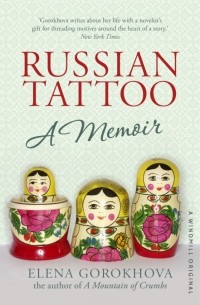
"Softer," I say, "softer. And the stress is on the end, like in the word toska," a word I think of but don't translate to him.
This is what gnaws at the three sisters all the time, even when their cheerful military friends come calling with stories about their past, cherished life in Moscow. The sisters wallow in toska, wearing black dresses, loving inappropriately, and cowering before a new sister-in-law who blossoms from a shy philistine to a full-fledged bully by the time the sisters realize that there is no escape. How could the provincial town where they live, a place with one school and one post office and no one to talk to, compare to the culture and splendor of the city they left behind?
Toska, I say so that Robert hears how the o sounds like an a because the stress falls on the end of the word.
"Definition of toska?" Robert asks, ready to file the meaning into a compartment of his scientific brain.
If I could recite the definition of toska, in English or Russian, there would probably be no Chekhov or The Three Sisters, or the entire pantheon of Russian literature Robert is so keen on deciphering. It is a paradox, really: for him to understand Russian literature, he needs to know the definition of toska, while it is precisely trying to shoehorn toska into a definition that guarantees the failure of that understanding.
Toska is a combination of melancholy and longing, I say. It's a deep sadness and the awareness that something has been lost. It's what you find in every Russian book published before 1917, I explain, the year when melancholy and sadness were outlawed in favor of general optimism and enthusiasm for our bright future. But there are also other ingredients in toska for which I don'tvhave words, things submerged deeply under the layers of silt on the soft bottom of the Russian soul.



 Ваша оценка




 britvaokkama24 февраля 2021438
 Twelve_Stamps29 июля 2017135