Это новая версия страницы книги. Часть функций ещё в работе — мы добавляем их постепенно.
К старой версии страницы- Главная
- Джером К. Джером
- 📚 Книги
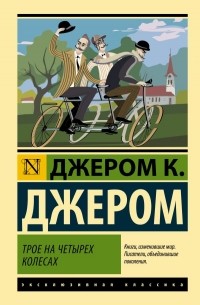
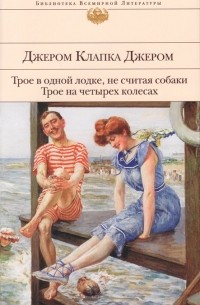
- Трое в лодке, не считая собаки. Трое на четырех колесахТрое в лодке, не считая собаки. Трое на четырех колесах

Ваша оценкаЖанры
Издательство:
ISBN:
978-5-17-082289-8
Год издания:
2014
Язык:
Русский
384 страницы.
Возрастные ограничения:
16+
Содержание
Трое в лодке, не считая собаки, роман
Перевод: М. Донской, Э. Линецкая
стр. 5-198
Трое на четырёх колёсах, роман
Перевод: А. Ливергант
стр. 199-382
История
Three Men in a Boat (To Say Nothing of the Dog),[Note 1] published in 1889, is a humorous account by Jerome K. Jerome of a boating holiday on the Thames between Kingston and Oxford.
The book was initially intended to be a serious travel guide, with accounts of local history along the route, but the humorous elements took over to the point where the serious and somewhat sentimental passages seem a distraction to the comic novel. One of the most praised things about Three Men in a Boat is how undated it appears to modern readers — the jokes seem fresh and witty even today.
The three men are based on Jerome himself (the narrator J.) and two real-life friends, George Wingrave (who went on to become a senior manager in Barclays Bank) and Carl Hentschel (the founder of a London printing business, called Harris in the book), with whom he often took boating trips. The dog, Montmorency, is entirely fictional but, "as Jerome admits, developed out of that area of inner consciousness which, in all Englishmen, contains an element of the dog." The trip is a typical boating holiday of the time in a Thames camping skiff. This was just after commercial boat traffic on the Upper Thames had died out, replaced by the 1880s craze for boating as a leisure activity.
Because of the overwhelming success of Three Men in a Boat, Jerome later published a sequel, about a cycling tour in Germany, entitled Three Men on the Bummel.
A similar book was published seven years before Jerome's work, entitled Three in Norway (by two of them) by J. A. Lees and W. J. Clutterbuck. It tells of three men on an expedition into the wild Jotunheimen in Norway.
____
Yet the book sold in huge numbers. "I pay Jerome so much in royalties," the publisher told a friend, "I cannot imagine what becomes of all the copies of that book I issue. I often think the public must eat them." The first edition was published in August 1889 and serialised in the popular magazine Home Chimes in the same year. The first edition remained in print from 1889 until March 1909, when the second edition was issued. During that time, 202,000 copies were sold. Jerome states in the author's introduction to the 1909 second edition, he'd been told another million copies had been sold in America by pirate printers. The book was translated into many languages. The Russian edition was particularly successful and became a standard school textbook. Jerome later complained in a letter to The Times of Russian books not written by him, published under his name in order to benefit from his success. Since its publication, Three Men in a Boat has never been out of print. It continues to be popular to the current day, with The Guardian ranking it #33 on The 100 Greatest Novels of All Time in 2003, and Esquire ranking it #2 in the 50 Funniest Books Ever in 2009.
The river trip is easy to re-create, following the detailed description, and this is sometimes done by fans of the book. Much of the route remains unchanged. For example, all the pubs and inns named are still open. A re-creation in 1993 by poet Kim Taplin and companions resulted in the travelogue Three Women in a Boat The book was also referenced in the 1956 parody novel on mountaineering, The Ascent of Rum Doodle, where the head porter Bing is said to spend "much of his leisure immersed in a Yogistani translation of Three men in a boat". In Have Space Suit—Will Travel, by Robert A. Heinlein, the main character's father is an obsessive fan of the book, and spends much of his spare time repeatedly re-reading it.
Science-fiction author Connie Willis paid tribute to Jerome's novel in her own 1997 Hugo Award-winning book To Say Nothing of the Dog. Her time-travelling protagonist also takes an ill-fated voyage on the Thames with two humans and a dog as companions, and encounters George, Harris, 'J' and Montmorency. The title of Willis' novel refers to the full title of the original book, "Three Men in a Boat - To Say Nothing of the Dog!".
--------
Three Men on the Bummel (also known as Three Men on Wheels) is a humorous novel by Jerome K. Jerome. It was published in 1900, eleven years after his most famous work, Three Men in a Boat (To Say Nothing of the Dog).
The sequel brings back the three companions who figured in Three Men in a Boat, this time on a bicycle tour through the German Black Forest. D. C. Browning's introduction to the 1957 Everyman's edition says "Like most sequels, it has been compared unfavourably with its parent story, but it was only a little less celebrated than Three Men in a Boat and was for long used as a school book in Germany." Jeremy Nicholas of the Jerome K. Jerome Society regards it as a "comic masterpiece" containing "set pieces" as funny or funnier than those in its predecessor, but, taken as a whole, not as satisfying due to the lack of as strong a unifying thread.
Сюжет
The story begins by introducing George, Harris, Jerome and Montmorency, the dog. The men are spending an evening in J.'s room, smoking and discussing illnesses they fancy they suffer from. They conclude they are all suffering from 'overwork' and need a holiday. A stay in the country and a sea trip are both considered, then rejected (J. describes the bad experiences had by his brother-in-law and a friend on sea trips). Eventually, the three decide on a boating holiday, up the River Thames, from Kingston upon Thames to Oxford, during which they'll camp, not with standing Jerome's anecdotes regarding previous mishaps with tents and camping stoves.
They embark the following Saturday. George must go to work that morning ("George goes to sleep at a bank from ten to four each day, except Saturdays, when they wake him up and put him outside at two") so J. and Harris make their way to Kingston by train. They are unable to find the correct train at Waterloo Station (the station's confusing layout was a well-known theme of Victorian comedy) so they bribe a train driver to take his train to Kingston, where they collect their hired boat and start their journey. They meet George later, up-river at Weybridge.
The remainder of the story relates their river journey and the incidents that occur. The book's original purpose as a guidebook is apparent as the narrator describes the passing landmarks and villages such as Hampton Court Palace, Hampton Church, Monkey Island, Magna Carta Island and Marlow, and muses upon historical associations of these places. However, he frequently digresses into funny anecdotes that range from the unreliability of barometers for weather forecasting to the difficulties that may be encountered when learning to play the Scottish bagpipe. The most frequent topics are river pastimes such as fishing and boating and the difficulties they present to the inexperienced and unwary.
The book includes classic comedy set-pieces, such as the story of two drunken men who slide into the same bed in the dark, the plaster of paris trout in chapter 17 and the "Irish stew" in chapter 14 - made by mixing most of the leftovers in the party's food hamper:
I forget the other ingredients, but I know nothing was wasted; and I remember that, towards the end, Montmorency, who had evinced great interest in the proceedings throughout, strolled away with an earnest and thoughtful air, reappearing, a few minutes afterwards, with a dead water-rat in his mouth, which he evidently wished to present as his contribution to the dinner; whether in a sarcastic spirit, or with a genuine desire to assist, I cannot say.
—Chapter XIV
Критика
Three Men in a Boat
The reception by critics varied between lukewarm and hostile. The use of slang was condemned as "vulgar" and the book was derided as written to appeal to 'Arrys and 'Arriets - then-common sneering terms for working-class Londoners who dropped their Hs when speaking. Punch magazine dubbed Jerome " 'Arry K. 'Arry". Modern commentators have praised the humour, but criticized the book's unevenness as the humorous sections are interspersed with more serious passages written in a sentimental, sometimes purple, style.
Comparison Three Men on a Bummel with Three Men in a Boat
Jeremy Nicholas says that the book is "unfairly chastised as being an ineffectual afterthought" to Three Men in a Boat, and that "the set pieces (the boot shop, Harris and his wife on the tandem, Harris confronting the hose-pipe, the animal riot in the hill-top restaurant) are as polished and funny (funnier, some would say) as anything in the earlier book." His analysis is that
The trump card that Bummel lacks, and which makes Three Men in a Boat what it is, is the River Thames.... It provides the framework for Jerome's discursive narrative. He can stray from the present adventure as much as he likes... but the river holds the whole thing together and gives the book its satisfying unity. The best television situation comedies rely on this same device, a world with clearly-defined parameters. A ramble through Germany and the Black Forest does not provide that."
Экранизации
1975 - Three Men in a Boat
1979 - Трое в лодке, не считая собаки
Three Men in a Boat
The story has been turned into several films.
Three Men in a Boat, a 1920 film with Lionelle Howard as J., H. Manning Haynes as Harris and Johnny Butt as George.
Three Men in a Boat a 1933 film with William Austin, Edmund Breon, and Billy Milton
Three Men in a Boat a 1956 film with David Tomlinson as J., Jimmy Edwards as Harris and Laurence Harvey as George.
In 1961, a German film - Drei Mann in einem Boot
In 1975 BBC produced a version for television adapted by Tom Stoppard, with Tim Curry as J., Michael Palin as Harris, and Stephen Moore as George.
In 1979, a musical comedy Three in a boat, not including the dog filmed by Soviet television, with Andrei Mironov as J., Aleksandr Shirvindt as Harris and Mikhail Derzhavin as George.
An episode of the Victorian detective show Cribb is based on the book.
The BBC made a 1962 musical adaptation for radio, starring Kenneth Horne, Leslie Phillips and Hubert Gregg.
In 2005 the comedians Griff Rhys Jones, Dara Ó Briain, and Rory McGrath embarked on a recreation of the novel for what was to become a regular yearly BBC TV series, Three Men in a Boat. After their first expedition along the Thames from Kingston upon Thames to Oxford, recreating the original novel; the trio embarked on a trip from London to the Isle of Wight in Jones's yacht where they would race her against her sister yacht. The following year Three Men in More Than One Boat saw the three borrowing, stealing and hitchhiking on numerous vessels to make their way from Plymouth to the Isles of Scilly. For their 2009 adventure the trio take to the waterways of Ireland, making their way from Dublin to Limerick with Dara's Greyhound Snip Nua and for 2010 it's Three Men Go To Scotland.
Ссылки
Рейтинг LiveLib
- 545%
- 435%
- 315%
- 24%
- 11%
Ваша оценкаЭмоции читателей от книги
Рецензии
Empty1 марта 2011Читать далее- Все, что нам нужно, - это отдых, - заявил Гаррис.
- Отдых и полная перемена обстановки, - сказал Джордж. -
Эти слова были решающими, и три друга, прихватив с собой собаку, отправляются в то-ли прогулку, то-ли путешествие, то-ли, просто вылазку -- подальше от шумного мегаполиса, поближе к природе. Казалось бы простая история о простом отдыхе простых парней -- а вошла в классику английского юмора.
Первая причина -- английский юмор. Не американский тортомвлицо, не французский обожеэтомоймуж, а бодрый, здоровый ржач, без вульгарности и пошлятины. Комический эффект достигается простым, как и всё гениальное, способом гиперболы: рассказчик начинает вроде как правдоподобно, потом явно преувеличивает, ещё преувеличивает, ещё, и, когда, казалось бы, ситуация доходит до абсурда и чудовищнее уже быть ничего не может -- выясняется, что это только цветочки.
Вторая причина -- собственно, объекты шуток. От бездарных музыкантов, снобов и лицемеров до мещанских интерьеров (см. "Ковёр на заднем фоне"), врунов-рыбаков и "гламурное кисо на природе". Ситуации, в которые попадают герои (или персонажи из их рассказов\воспоминаний) не правдоподобны, нет. Они -- сама жизнь, добрая половина из них случались в разное время с каждым: будь то суета и непременно забытая вещь при собирании чемодана или упорное нежелание чайника закипать, пока ты на него смотришь.
Третья -- предметное наполнение книги. Характеры, портреты, интерьеры и пейзажи легко читаемы, напрягать мозг, пытаясь представить себе "мужчину с мощным затылком, волосами, цвета несвежей селёдки и типичной для англичанина улыбкой" не придётся, воображение само рисует яркую и подробную картинку происходящего. Отдельный вопрос -- пейзажи. Когда доходит до них, Джером-хохотун прячется и появляется Джером-романтик, чуткий и возвышенный, но без лишнего пафоса.
Четвёртая -- размышления, которым периодически предается автор. Вот хотя бы...
Многие, рискуя затопить свой корабль, нагружают его всякими вещами, которые кажутся им необходимыми для удовольствия и комфорта в пути, а на самом деле являются бесполезным хламом. Они загромождают свое утлое суденышко по самые мачты дорогими платьями и огромными домами, бесполезными слугами и множеством светских друзей, которые ни во что их не ставят и которых сами они не ценят, дорогостоящими увеселениями, которые никого не веселят, условностями и модами, притворством и тщеславием и - самый грузный и нелепый хлам -- страхом, как бы сосед чего не подумал.<...> Хлам, все хлам! Выбросьте его за борт! Это из-за него так тяжело вести лодку, что гребцы вот-вот свалятся замертво. Вы не знаете ни минуты отдыха от тревог и беспокойства, у вас нет времени полюбоваться игрой теней, скользящих по поверхности реки, солнечными бликами на воде, высокими деревьями на берегу, глядящими на собственное свое отражение, золотом и зеленью лесов, лилиями, белыми и желтыми, темным колышущимся тростником, осокой, ятрышником и синими незабудками.
Пятая... Да что я считаю? Разве можно измерить хорошую книгу сухими цифрами? Красоту не передашь диаграммой, шутка математически неописуема, статистика не средство для учёта эмоций. Читайте, смейтесь, грустите, отдыхайте, как те, трое в лодке. А не считаться с собакой у вас при всём желании не получится =)
P.S. После прочтения стабильным блюдом в холостяцком меню последних трех дней перед зарплатой стало ирландское рагу. Кто читал -- тот поймёт
257 понравилось
2,7K
nad120430 сентября 2012Читать далееШикарно! Превосходно! Великолепно!!! Срочно записываюсь в ярые поклонники этой книги! Уже какой день после прочтения постоянно возвращаюсь к ней, выискиваю особо удачные моменты, выписываю цитаты и тихонько хихикаю от переполняющих меня чувств. Даже не верилось, что юмор XIX-го века настолько органично будет восприниматься в XXI-м. Фантастика!
Мне особо не хотелось читать "Трое в лодке, не считая собаки". Как-то в детстве увидела по телевизору фильм, где странно одетые люди говорили какие-то чуднЫе вещи и вели себя как полные придурки! Скорей всего, это детское восприятие сыграло злую шутку: не готова я была еще к этому фильму. Но название запомнилось, воспоминания о полное белиберде остались и читать книгу я не хотела. Ни в детстве, ни в юношестве, ни в более зрелом возрасте. Какое счастье, что она мне выпала во флэшмобе! Это здорово! Такая таблетка от осенней хандры! Замечательные шутки: я именно за такой юмор — без пошлости, вульгарщины, цинизма. Тут во всем есть мера. Тонкие, изящные, несколько старомодные шутки, пикантные ситуации, смешные комментарии происходящего рассказчиком. Если кто-то еще не читал — прочитайте, пожалуйста! Это, действительно, очень хорошая книга, которую не стыдно советовать всем!!!
202 понравилось
2,5K
Deli19 апреля 2013Читать далееК этому знаменитому образчику английского юмора я, надо сказать, приступала с нетерпением, потому что это реально одна из тех немногих книг, что мне приходилось наблюдать на своих полках с рождения, но дальше наблюдений дело почему-то не шло. Наверное, всему виной посмотренный в незапамятные времена фильм, оставивший после себя смутные ощущения вымученного фарса. Книга, собственно говоря, тоже оказалась фарсом, но зато каким смешным. Как убеждает литературоведение, Джером написал "Троих в лодке", руководствуясь собственными впечатлениями от аналогичного путешествия, а также ненароком подслушанным в поезде разговором случайных попутчиков о точно таком же приключении. После этого осталось подставить на место героев себя и своих друзей, еще тех субчиков, и наслаждаться результатом.
Три великовозрастных обалдуя из хорошего общества моциону ради решили совершить восхождение на лодке к верховьям Темзы. Именно против течения, потому что по течению плывут только слабаки - в этом нас герои еще будут убеждать, хотя с ними всё ясно и так. С собой они возьмут столько багажа, что соседи решат, что они переезжают. И пса с боевым характером и аристократическим именем Монморанси. И мы узнаем во всех подробностях, насколько у них всех крепкие нервы, а заодно и желудки, как неудобно спать в лодке, как надо преодолевать шлюзы, как правильно наслаждаться природой, а также о том, как одну рыбу могла поймать целая деревня. По пути они останавливаются в каждом населенном пункте, а повествователь еще активно осматривает местность. А местность, к слову, у них довольно живописна, Темза (пусть и в 19м веке) - это вам не Чусовая (пусть и в 21м), где можно плыть неделю и вокруг тянется бесконечный темный лес. Нет, повсюду городки, деревеньки, люди, лодки, пароходы и точно такие же туристы, делающие свой вклад в испытание крепости нервов. Главный герой зацепляется взглядом за всё, до чего может дотянуться, и бесконечно разглагольствует: о прошлом и настоящем, о жизни всей этой человеческой массы и ее нравах, попутно вспоминая бесконечным потоком разнообразные байки, как из собственных архивов, так и чужие. Наверное, именно поэтому "Троих в лодке" и называют комедией нравов, показывающей широкую панораму придурков того времени. Мне кажется, такое веселое и ироничное отношение ко всему, в том числе и к себе, и делает книгу столь легкой и искрометной. Потому что проскочи во всех этих многочисленных монологах о королях и Хартии вольностей хоть одна серьезная нотка - и читатель уснет. Не сопровождались бы довольно самодовольные и бесцеремонные речи персонажей авторским подтруниванием - и читатель бы их возненавидел. А так - читаешь и хихикаешь себе под нос над тем, как кто-то в очередной раз сел в лужу. И настроение улучшается =)
175 понравилось
1,6K
Цитаты
Все цитатыПодборки с этой книгой

PocketBook
augustin_blade
- 1 202 книги

Зарубежная классика (АСТ. Астрель)
Crow
- 651 книга
Гениальные книги
denisov89
- 758 книг
Коллажи-загадки
FuschettoStoriettes
- 3 213 книг

Зарубежная классика
vale-tina
- 682 книги