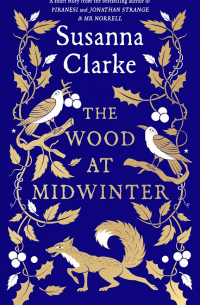
Susanna Clarke is a literary architect who does not build rapidly; she carves cathedrals out of mist and shadows over decades. Best known for her monumental debut, the Neo-Victorian alternative history «Jonathan Strange & Mr Norrell», and the labyrinthine, metaphysical puzzle box «Piranesi», Clarke is a writer who explores the thinning veil between English reason and Faerie madness. Her career has been marked by long silences—imposed by chronic illness—making every morsel of prose she releases a matter of significant import. The work in question, «The Wood at Midwinter», is a short story published as a standalone volume, accompanied by an afterword-essay titled «Snow». It sits squarely within the thematic geography of her debut novel, serving not merely as a festive divertissement but as a deeper excavation of her recurrent obsession: the interface between the domestic and the feral.
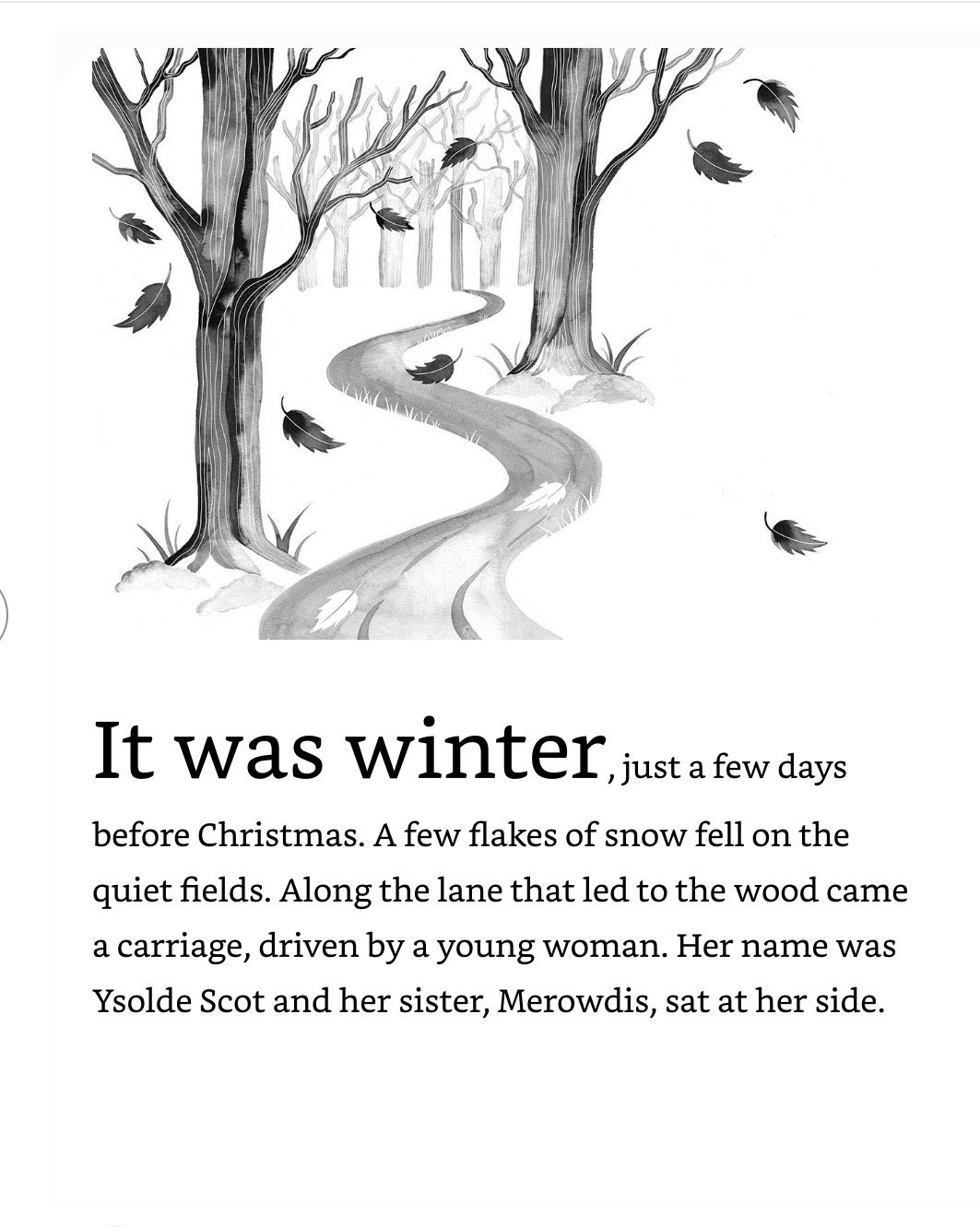
The narrative concerns the peculiar spirituality of a young Victorian woman named Merowdis Scot. The plot, if one can call it such, is ostensibly simple, unfolding over a single afternoon: Merowdis, accompanied by her pragmatic sister Ysolde and a menagerie of animals—including two dogs and a pig named Apple—travels to a snowy wood to escape the suffocating propriety of human society. While the surface conflict appears to be a mild clash of temperaments between the sisters, the true drama is internal and cosmological. Upon entering the treeline, the narrative perspective fractures and multiplies; we are privy to the thoughts of the dogs, the philosophizing pig, a blackbird, a fox, and the collective consciousness of the trees themselves. In the hushed amphitheatre of the winter forest, Merowdis engages in a dialogue with the ancient wood, seeking a destiny that transcends the conventional marriage proposal of a Mr. George Blanchland. The conflict here is existential: it is a duel between the linear, "safe" time of human progress and the cyclical, predatory, yet holy time of nature. Ultimately, Merowdis rejects the human path for a saintly, terrifying vocation, accepting a bear cub as her "Midwinter child" and cementing her transformation from a Victorian lady into a figure of folklore.
Clarke's intention is to reclaim the concept of "sainthood" from the sanitized, stained-glass staticity of church doctrine and return it to its roots in "neurodivergence" and terrifying freedom. As Apple the pig sagely observes: «Saints do shocking things. It's what makes them saints.» Clarke posits that true spiritual connection—or perhaps what we modernize as neurodivergence—is an aperture through which the chaotic reality of the world enters. Merowdis is not merely "eccentric"; she is permeable. The message is that the boundary between human and animal is a fabrication of the polite mind. To cross it, as Merowdis does, is to invite madness, pain, and a sublime joy that "normal" people like Ysolde can witness but never truly comprehend. The story serves as a hagiography for those who find kinship in moss and fur rather than in parlors and etiquette.
The title «The Wood at Midwinter» is deceptively pastoral, hiding a sharper astrological and metaphorical edge. "Midwinter"—the solstice—is the liminal hinge of the year, the longest night where the sun is "hidden." It is a time when the barriers between worlds are notoriously brittle. Clarke is fascinated by these thresholds. The "Wood" here is not an inert setting; as the text explicitly states, «In winter the wood is listening.» The title suggests a specific temporal coordinate where the static noise of the living world dies down enough for the landscape to speak. It is a location of judgment and transformation. The title also alludes to the womb-like quality of the forest—dark, cold, yet capable of birthing the strange destiny Merowdis seeks.
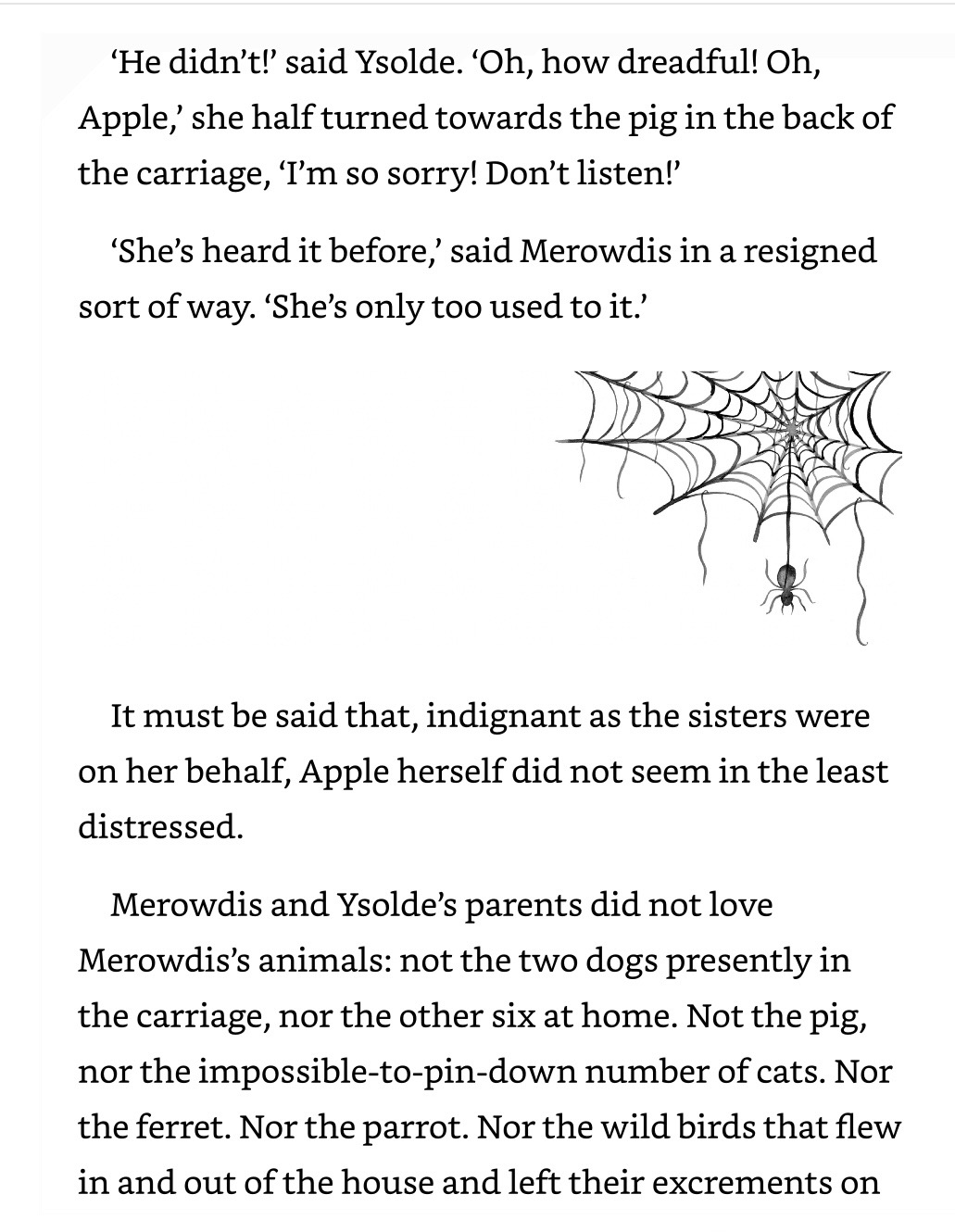
The atmosphere is rendered with Clarke's signature "dry" magical realism—a blend of Austenian social observation and pantheistic dread. The sensory details are exquisite and tactile: one can almost smell the «decomposing leaves» and feel the bite of the «grey snow» on the cheek. Clarke employs a unique polyphonic subtext, anthropomorphizing the environment not in a Disney-esque fashion, but with a strange, alien logic. A spider's web is described as «a well-argued treatise on the importance of friendship»; the wood speaks in a voice like «wind, but also like a thousand trees thinking the same thought».
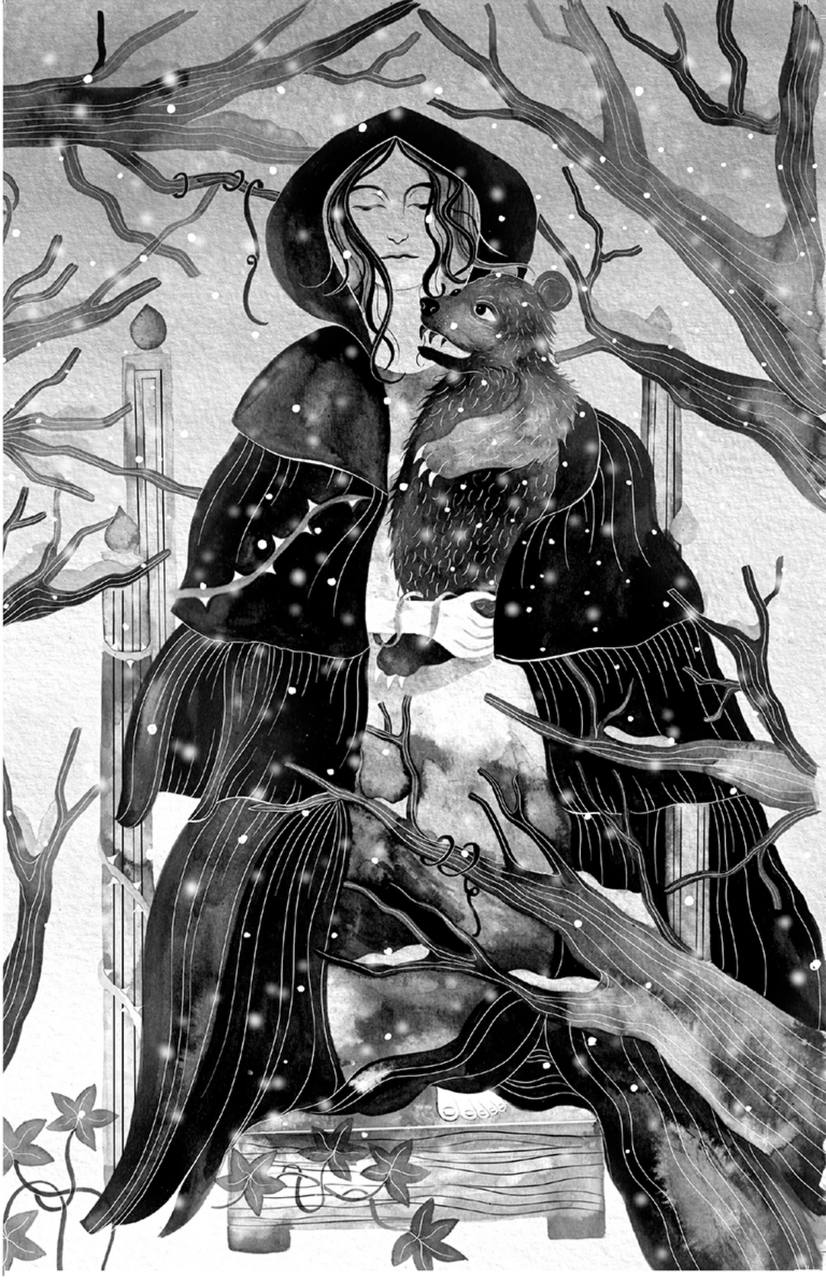
This creates a subtext of profound isolation for the human characters who cannot hear it, contrasting with the vibrant community Merowdis experiences. The juxtaposition of the domestic (a pig named Apple, apple sauce jokes, bonnets) with the savage (a bear cub with «strong claws that had already torn flesh») creates a tension that prevents the story from becoming saccharine. We are reminded that this path leads to Merowdis seated on a «black and battered» throne, a visual echo of the darker fairy tales where the price of magic is often one's own humanity.
The Essay: «Snow»
The accompanying afterword, «Snow», is essential to understanding the novella's DNA. Here, Clarke reveals the unexpected synthesis of influences: the recursive labyrinths of Jorge Luis Borges and the ethereal pop-artistry of Kate Bush's album 50 Words for Snow. It acts as an exegetical key, explaining that Merowdis is a variation of the archetype of the woman who falls in love with the inhuman (a snowman, a snowflake, a bear). By connecting the story to «Jonathan Strange & Mr Norrell»—confirming that Merowdis lives in the Raven King's magical capital of Newcastle—Clarke enriches the subtext for loyal readers, turning a standalone story into a "lost footnote" of her magnum opus.
«The Wood at Midwinter» is a diamond: brilliant, sharp, cold, but undeniably small. Herein lies the justification for the 7/10 rating and the work's primary shortcoming. It feels less like a full meal and more like an exquisite amuse-bouche left over from a grander banquet. The narrative arc—from carriage ride to mystic revelation—moves with a swiftness that belies the weight of the transformation. One moment Merowdis is chatting, and the next she is adopting a bear and sealing her fate; the reader is given little time to mourn the life she leaves behind. It has the sketchiness of a dream or, as Clarke admits, a radio broadcast script.
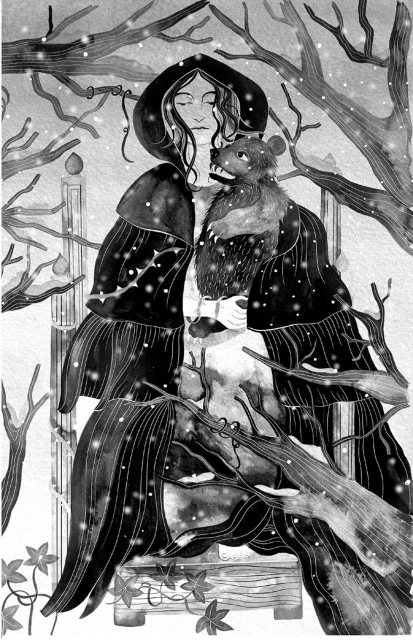
However, despite its brevity, it is a potent distillation of Clarke's genius. It is a work for those who suspect that the trees are judging them, and for those who know that true holiness is usually indistinguishable from madness. It is a "winter ghost story" that lingers like frost, offering a glimpse into the «savage cathedral» of nature where saints sit on ragged thrones. It is imperfect, fleeting, but undeniably magical.




 50 понравилось