
Wishlist
El881
- 62 книги

Ваша оценкаЖанры
Ваша оценка
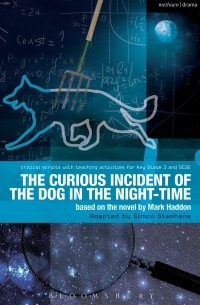
Да, спустя пол недели я все-таки решила, что мне есть что сказать об этой книге. Начну, пожалуй, с того, что книга не легкая к прочтению - совсем наоборот. Да, нельзя отрицать тот факт, что язык написания прост, так как, в конце концов, повествование идет от главного героя - пятнадцатилетнего мальчика-подростка (это, как я считаю, плюс, т.к если бы повествование исходило от третьего лица, а не от самого мальчика, то книга не получилась бы такой сильной) НО! Эмоционально произведение прямо-таки выбивает из колеи, заставляет очень над многим задумываться, признаюсь, пару раз у меня возникало желание отбросить его куда подальше и взять в руки какое-нибудь легкое чтиво из жанра young adult, дабы отвлечь свой мозг от всех этих картин стенания Кристофера и от его агрессивных действий по отношению к окружающим. Но я взяла всю свою силу воли в руки и продолжила, т.к книгу мне посоветовал один человек, мнением которого я дорожу. Я пишу сейчас обо всем этом, чтобы предупредить людей, собирающихся прочитать произведение, что оно эмоционально тяжелое, но это вовсе не означает, что его не стоит читать - наоборот. Оно сильное, даже очень. Марк Хэддон не приукрашивает жизнь, мысли, поступки людей, больных аутизмом. Он просто описывает все так, как это есть на самом деле и это необходимо прочитать, чтобы лучше понять, почему аутисты поступают так, как поступают и понять их тип мышления . У Кристофера не имеется проблем с интеллектом - напротив, он довольно умный малый, обладающий способностями к точным наукам таким как физика и математика. Он мыслит очень структурировано и четко. Но в то же время мальчик-подросток напрочь лишен эмпатии, базовому человеческому сочувствию к проблемам окружающих, - его заботят лишь свои собственные. Он только и думает, как о том, как бы не пропустить экзамен по математике на степень "A", когда его мать остается без работы и квартиры. Кристофер не терпит прикосновений, не позволяет себя обнять, а если кто-либо пытается это сделать, то он вполне способен ударить или даже броситься в драку, а также не понимает шуток. Я не берусь осуждать его родителей, их поведение по отношению к ребенку, потому что это правда чертовски сложно - постоянно находиться с ребенком-аутистом и при этом держать себя в руках, но к концу книги они, думаю, все-таки в чем-то пересмотрели свои взгляды на жизнь и свои действия и в будущем постараются исправиться.

Mrs. Peters’s husband is a vicar called the Reverend Peters, and he comes to our school sometimes to talk to us, and I asked him where heaven was and he said, “It’s not in our universe. It’s another kind of place altogether.”
The Reverend Peters makes a funny ticking noise with his tongue sometimes when he is thinking. And he smokes cigarettes and you can smell them on his breath and I don’t like this.
I said that there wasn’t anything outside the universe and there wasn’t another kind of place altogether. Except that there might be if you went through a black hole, but a black hole is what is called a singularity, which means it is impossible to find out what is on the other side because the gravity of a black hole is so big that even electromagnetic waves like light can’t get out of it, and electromagnetic waves are how we get information about things which are far away. And if heaven was on the other side of a black hole, dead people would have to be fired into space on rockets to get there, and they aren’t or people would notice.
I think people believe in heaven because they don’t like the idea of dying, because they want to carry on living and they don’t like the idea that other people will move into their house and put their things into the rubbish.
The Reverend Peters said, “Well, when I say that heaven is outside the universe it’s really just a manner of speaking. I suppose what it really means is that they are with God.”
And I replied, “But where is God?”
And the Reverend Peters said that we should talk about this on another day when he had more time.
What actually happens when you die is that your brain stops working and your body rots, like Rabbit did when he died and we buried him in the earth at the bottom of the garden. And all his molecules were broken down into other molecules and they went into the earth and were eaten by worms and went into the plants and if we go and dig in the same place in 10 years there will be nothing except his skeleton left. And in 1,000 years even his skeleton will be gone. But that is all right because he is a part of the flowers and the apple tree and the hawthorn bush now.
When people die they are sometimes put into coffins, which means that they don’t mix with the earth for a very long time until the wood of the coffin rots.
But Mother was cremated. This means that she was put into a coffin and burned and ground up and turned into ash and smoke. I do not know what happens to the ash and I couldn’t ask at the crematorium because I didn’t go to the funeral. But the smoke goes out of the chimney and into the air and sometimes I look up into the sky and I think that there are molecules of Mother up there, or in clouds over Africa or the Antarctic, or coming down as rain in the rain forests in Brazil, or in snow somewhere.

Prime numbers are what is left when you have taken all the patterns away. I think prime numbers are like life. They are very logical but you could never work out the rules, even if you spent all your time thinking about them.

We will know that the world is going to end soon because when we look up into the sky at night there will be no darkness, just the blazing light of billions and billions of stars, all falling.