

Лучшие бизнес-книги в 2016г по версии vc.ru
OlessyaMsk
- 10 книг

Ваша оценкаЖанры
Ваша оценка
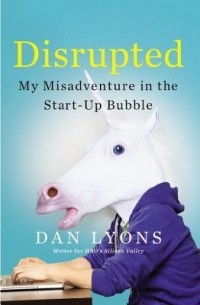
Не зря единорожек на обложке. Комичность состоит в изображении сотрудника в качестве рогатого коня. Зато конь белый, с голубыми глазами и почти светящимся рогом... Это прикольная маска, которую обычный человек надевает на описываемой автором работе и сидит как... конь.
Короче говоря, с метафорами и аллегориями у автора всё в порядке.
Я тоже считала, что стартап - это что-то супер новое, что никогда не бомбанёт мне в голову.
Книга сходу располагает благодаря искренности автора. Автор ничему не учит, не наставляет и не мотивирует, а делится опытом, дальше выводы за читателем.
Предыстория такова - автор устроился на работу в компанию HubSpot, надеясь стать маркетологом. Автору уже 50 лет, и начинать эксперименты становится рискованно в направлении стабильного обеспечения семьи. В книге автор поделился реальным опытом и рассказал, что довелось пережить, что видел, что задело. Автор о компании, в которой работал:
О СОДЕРЖАНИИ. Почему компании с большими оборотами теряют деньги; почему рыночная стоимость компаний увеличивается, хотя сама компания терпит убытки - на эти вопросы автор не даёт ответы, да книга не о них, поэтому ждать ответов на всё-всё-всё не стоит.
На какие вопросы автор даёт ответы:
Это не полный список, в книге рассказано больше, автор не стесняется незавуалированно показывать используемые в компаниях психологические приёмы по управлению толпой молодых сотрудников, прямо говорит об искусственности создаваемой культуры компании, которая больше похожа на секту, чем на комфортные условия. В описываемой автором обстановке крайне сложно неокрепшему уму оставаться в здравом рассудке. Автору это блестяще удалось, сказалась опытность и самоуверенность.
В книге нет однозначных выводов. Автор не навязывает, что такое хорошо, а что - плохо, а просто вываливает факты. Автор ведёт к мысли о том, что не нужно ходить с замыленным взглядом, нужно ценить себя, а не компанию, в которой работаешь.
К прочтению рекомендую. Книга весёлая и полезная, а главное - авторская и оригинальная, не переписанная. Это действительно что-то новое и по-настоящему классное. Мой отзыв поверхностный и не передаёт полностью оставленное впечатление.

Когда немолодого, но относительно известного IT-журналиста сократили из газеты по причине довления тех интернетов, он устроился в некой старт-ап. Сначала он хотел поработать (потому что при устройстве на работу забыл где-то ушной лапшесниматель), а потом просто дожить выхода на фондовый рынок (по разным причинам -- от простого и банального желания обогатиться, до репутационных издержек от преждевременного увольнения по собственному желанию) и слиться обратно в тёплую ламповую журналистику, подальше от этих сектантов от IT.
Написано бодро, читается легко, но это именно что ужас-ужас-ужас.

If you can’t dazzle them with brilliance, baffle them with bullshit” seems like the motto not just for Chopra but for the entire conference. Benioff and his philanthropy, the dry ice and fog machines, the concerts and comedians: None of this has anything to do with software or technology. It’s a show, created to entertain people, boost sales, and fluff a stock price.

“I’m worried,” I tell him. “This place seems out of control.” Harvey says everything I’m describing about HubSpot is absolutely normal. “You know what the big secret of all these start-ups is?” he tells me. “The big secret is that nobody knows what they’re doing. When it comes to management, it’s amateur hour. They just make it up as they go along.”

In December 2014 Nicholas Lemann published an essay in the New Yorker contrasting the vision of work that Alfred P. Sloan, the legendary CEO of General Motors, described in his 1964 memoir, My Years with General Motors, with the vision laid out in a series of books published by executives from Google.
In the twentieth-century model under which Sloan's GM operated, companies "were heavily unionized, and offered their white-collar employees de-facto lifetime tenure. Employees got steady raises during their working years and pensions after retirement," Lemann writes. Things changed with the emergence of the Internet and in particular with Google, the first successful Internet company with a large workforce. Google succeeded, Lemann writes, by "breaking the rules about how to run a business."
The biggest rupture involves the social compact that once existed between companies and workers, and between companies and society at large. There was a time, not so long ago, when companies felt obliged to look after their employees and to be good corporate citizens. Today that social compact has been thrown out. In the New Work, employers may expect loyalty from workers but owe no loyalty to them in return. Instead of being offered secure jobs that can last a lifetime, people are treated as disposable widgets that can be plugged into a company for a year or two, then unplugged and sent packing. In this model, we are basically freelancers, selling our services in short-term engagements. We may have dozens of jobs over the course of our careers.
"Your company is not your family" is how LinkedIn's multibillionaire cofounder and chairman Reid Hoffman puts it in his book The Alliance: Managing Talent in the Networked Age. Hoffman says employees should think of a job as a "tour of duty" and not expect to stay for too long. In his view, a job is a transaction, one in which an employee provides a service, gets paid, and moves on. In addition to his duties at LinkedIn, Hoffman works as a partner at Greylock Capital, a top venture capital firm. Forbes calls him "the most connected man in Silicon Valley." He is widely respected, even revered, and his ideas about the relationship between employers and employees have influenced a generation of entrepreneurs, who take his word as gospel.
Hoffman's line about a company not being a family traces its roots to a "culture code" that Netflix, the Silicon Valley video-subscription company, published in 2009, and which famously declared, "We're a team, not a family." The Netflix code inspired a generation of tech start-ups and "may well be the most important document ever to come out of the Valley," Facebook COO Sheryl Sandberg once said. Shah used the Netflix code as the model for his HubSpot culture code and lifted the original Netflix line: "We're a team, not a family."
Netflix justified the "not a family" idea by arguing that like a pro sports team, tech companies need "stars in every position." That deal makes sense if you're a professional athlete who can earn millions of dollars a year and retire at age thirty or thirty-five, but seems a bit ruthless when applied to the rank-and-file worker. The result, according to countless articles in publications like Fortune, the New Republic, Bloomberg, and New York Magazine, is that Silicon Valley has become a place where people live in fear. As soon as someone better or cheaper comes along, your company will get rid of you. If you turn fifty, or forty, or thirty-five; if you demand a raise and become too expensive; if a new batch of workers comes out of college and will do your job for less than what you are paid -- you're gone. So don't get too comfortable.
This new arrangement between workers and employers was invented by Silicon Valley companies and is considered an innovation as significant as the chips and software for which the Valley is better known. Now this ideology has spread beyond Silicon Valley. We are living in a period of huge economic transformation, in which entire industries -- retail, banking, healthcare, media, manufacturing -- are being reshaped by technology. As those industries change, so does their approach to treating workers.
But does anyone really want to have twenty to twenty-five different jobs over the course of a forty-year career? It's hard to see how this arrangement can be good for workers. Bouncing around when you're young is one thing, but at some point people want to get married, have kids, and settle down. Stability becomes important. In the World According to Hoffman, you will spend half of your life searching for a new job, going on job interviews, getting trained, settling in, signing up for the new insurance (that is, if you get insurance), filling out your tax paperwork, moving over your 401(k) plan. You'll barely figure out where the foosball tables are located before it's time to go find a new job.
Amazon, which has gained a reputation as an especially harsh place to work, adds a cruel twist to Hoffman's short-term "tour of duty" philosophy. The median Amazon worker lasts only one year at the company, according to a 2013 study by PayScale, a company that tracks compensation data. Amazon compensates workers in part with restricted stock units spread over four years -- but, unlike most tech companies which distribute an equal number each year, Amazon backloads the grants so that the lion's share of the stock units arrive in years 3 and 4. Employees who leave after one year might reportedly get only 5 percent of their grant.
While many tech companies treat employees poorly, they also expect them to be loyal, to feel for their employer the kind of passion that a sports fan feels for a team. Employees at HubSpot are told that the needs of the company are more important than their own. "Team > individual" is how Dharmesh expresses this in his culture code, whose subtitle is "Creating a company we love." Who falls in love with a company? Especially when that company tells you that we're not a family?
Yet those Millennials running around the HubSpot offices in their orange clothes and orange shoes don't just like HubSpot; they love HubSpot. It's their team. It doesn't bother them that their team feels no such loyalty to them.