Книжный Вызов 2014
RoxyFoxy
- 18 книг

Ваша оценка
Ваша оценка
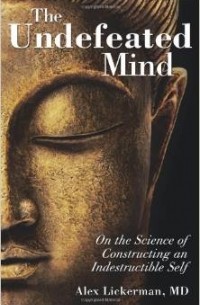
Chapter 10. Muster your courage
“Few things have as much power to make us suffer as fear. More than merely an obstacle to strength, fear is nearly its antithesis, for nothing weakens us quite as much.”
“Further, because fear feels bad, when we can’t escape the things that cause it, we often try to stop the feeling itself. But trying to suppress fear rarely works. In fact, as described in Chapter , it often leads to greater harm than that caused by fear alone. In contrast, accepting fear often paradoxically reduces its intensity. Accepting fear also (and arguably more importantly) reduces fear’s influence, thereby providing a path for us to find courage, the ability to take action in spite of fear. Aiming to be courageous rather than fearless, then, may be not only safer but also more realistic”
“Though research shows that 80 percent of people suffering from anxiety aren’t receiving professional help for it, it also suggests that most of them don’t actually need it: anxiety self-management techniques in many instances work just as well”
“We might also manage fear by realizing that in the long term we don’t actually remember most of what happens to us. Thus, when facing obstacles, pausing to remind ourselves that we won’t likely even recall having faced them—implying that we’ll have found a way to surmount them or to live with them—may also offer us a path to facing them with courage.”
“Despite its various causes, panic is always seeded by a thought (though one often not remembered). It may be the thought that the chest pain we’re feeling is now radiating down our left arm, or that airplanes sometimes crash, or that we can’t answer any of the questions on a biochemistry exam. But when such thoughts lead to the belief that we’ve become trapped in an acutely dangerous situation from which we have no escape, they begin to trigger many of the physical symptoms characteristic of panic. These symptoms then often lead to a belief that something is seriously wrong with us, something that might actually kill us”
“A second technique to quell acute anxiety involves rating the severity of the anxiety as we feel it moment by moment. Few things bounce us out of an experience more quickly than pausing to examine our own reactions to it, which takes us from having an experience to watching ourselves have an experience”
“A third technique involves looking for and correcting thought errors that cause us to panic. Most of us, for example, think anecdotally rather than statistically”
“Finally, we can habituate ourselves to the things we fear by deliberately and repeatedly exposing ourselves to them. For just as pleasures become less enjoyable the more often we repeat them, fearful stimuli become less frightening the more often we encounter them”
“One final technique that can help us counteract this tendency involves, paradoxically, imagining the worst possible outcome as well as we can. For in asking ourselves detailed questions about how a disaster might play out in the future, we’ll often begin to imagine ways we might manage it and thus fear it less in the present. Also, when anticipating a disaster, we tend to imagine our future only in terms of the consequences to which we think the disaster will lead, failing to consider all the good things that will inevitably occur as well. Additionally, we fail to realize that disasters don’t, in general, affect us as much or for as long as we predict they will. Further, after playing out the worst possible outcome as well as we can, if we then envision other events we think will occupy our thoughts in the future besides thoughts about a potentially impending disaster, research suggests we’ll start to believe our future won’t be quite as bad as we think. “
“Yet in his book Staring at the Sun, Irvin Yalom holds out hope for a third possibility: that by willfully and directly confronting our fear of death we can increase our determination to live well; that a finely honed awareness of death can help us avoid wasting time on pursuits for which we’re ill-suited or in which we have no real interest but in which we participate out of a sense of obligation or guilt; and that keeping our life’s end firmly in mind can help us focus on those things that the wise know are most likely to bring happiness: our relationships and helping others. In other words, Yalom argues, though death itself may destroy us, the idea of death may save us. ”
“What she was describing, I realized suddenly, was Yalom’s concept of rippling. As he writes, “Rippling refers to the fact that each of us creates—often without our conscious intent or knowledge—concentric circles of influence that may affect others for years, even generations. That is, the effect we have on other people is in turn passed on to others, much as the ripples in a pond go on and on until they’re no longer visible but continuing at a nano level.” He then draws an important contrast between the hope to preserve our personal identity after we’re gone—a futile attempt doomed to failure—and “leaving behind something from [our] life experience.””
“But whether that comfort comes from merely having a mystical experience or from the belief in the persistence of life beyond death that such mystical experiences often create isn’t clear. Many people who’ve reported such experiences, whether drug-induced or otherwise, say they have indeed concluded from them that life continues in some form after death and that they’re no longer afraid of it as a direct consequence, while many who haven’t developed such a belief (like me) often report their fear of death continues.”
“The self-fulfilling prophecy theory of social interaction argues that the way we expect other people to behave alters our behavior in such a way that causes them to fulfill our expectations”
“Not only that, but we also tend to attribute our subsequent behavior not to previous expectations others have had of us but to our own disposition, especially if multiple people confirm our self-perception in multiple contexts. 0 Thus, if our parents, our teachers, and our friends all treat us as if we’re helpless, helpless is what we’ll believe ourselves to be and thus what we’ll likely become so”
“Because the people with whom we surround “ourselves have more control over what we feel than we often do ourselves and because we have more control over what they feel than they often do themselves, we have to take responsibility for whom we pull out of them if we want to enjoy whom they pull out of us”
“For we can resist discouragement by articulating our life’s mission; accomplish that mission by making a great determination; overcome the obstacles that naturally arise when we make such a determination by changing poison into medicine; gain the strength to change poison into medicine by accepting responsibility and standing against injustice; endure pain by accepting it and loss by letting go of what we cannot keep; enjoy what we have by learning to appreciate it and help ourselves through trauma by helping others; conquer fear by leveraging our connections to the ones we love. And, finally, I realized, gain inspiration from others who’ve managed to forge an undefeated mind of their own—as I did in that moment from Rita.”
“Acceptance, for example, really does make pain easier to withstand, yet sometimes only slightly. But when added to a fierce determination to accomplish an important mission, as well as to an expectation that accomplishing that mission will require the feeling of even more pain, strength often appears that makes large problems seem abruptly small. Though”
“On the other hand, sometimes no matter how hard we pull, our lives don’t seem to move at all. Some struggles, in fact, take years or even decades to win (one of the titles bestowed upon the Buddha was “He Who Can Forbear”). But as long as we refuse to give in to despair and resolve to continue taking concrete action, some kind of victory is always possible. So when everything seems hopeless and you want to give up, no matter how much others may doubt you or you may doubt yourself, hold that knowledge fast to your heart and fix your mind unwaveringly on this most imperative of calls to action: never be defeated.”

Chapter 9. Encourage others
“Which suggests that the reason love makes us feel good has less to do with romantic attraction or even personal connection than it does with the way it causes us to regard those for whom we feel it. That is to say, not just with empathy (according to Oxford Dictionaries Online, “understanding and sharing the feelings of another”) or sympathy (“pitying someone else’s misfortune”), but with compassion—meaning with the same concern for their happiness as we have for our own.”
“Thus, if our aim is to help others become happy, we must always apply our own judgment to the actions we’re asked to take on their behalf.”
“Indeed, a compassionately wise person cares about his own happiness as much as the happiness of others—no more and no less”
“Though compassion can certainly be gentle, it must also sometimes be harsh, forceful, and even angry. We can’t judge the quality or intent of an action only by its superficial appearance. With the intent to increase another person’s happiness as our constant aim, we may sometimes find ourselves taking action that paradoxically seems on the surface to lack the very compassion that drives it, as when a parent reprimands a child to teach him not to hit other children.
Nor, finally, does compassion even require us to like those for whom we strive to feel it. Being compassionate may mean thinking benevolently about people despite their flaws, but it doesn’t mean acting as if those flaws don’t exist. Nor does it mean we can’t prefer one person to another. We neither have to pretend that some people don’t annoy us nor open ourselves up to establishing personal relationships with those who do annoy us for their happiness to matter to us.”
“Loving-kindness meditation consists simply of making conscious attempts to generate feelings of compassion for others, a practice that research now shows improves our ability to feel compassion in general”
“In Nichiren Buddhism, however, practitioners are taught to go one step further and chant for the happiness of people they actively dislike”
“And still others have managed to embrace one of the most controversial ideas of all: that people we deem purposely malevolent are in fact only grievously deluded. Deluded, that is, in believing that someone else’s suffering has in some way become necessary for their happiness”
“And though it may be true that we need to become angry to fight against injustice, that doesn’t mean we can’t also feel compassion for the people who commit it.”
“Even when we do manage to summon up feelings of compassion for others, maintaining those feelings can be exhausting, often requiring that we simultaneously restrain our annoyance, frustration, and even rage. Which”
“Research now shows what many of us know from experience to be true: taking action to alleviate the suffering of others helps us better”
“One possibility, suggest Schwartz and Sendor, is that focusing on the problems of others alters the way we see ourselves in relation to our own. Thinking about a problem we have in the context of someone else’s life, divorced from how it impacts us, may open up avenues of creative thinking and produce ideas about managing it that would otherwise have remained obscured by our emotional reluctance to apply that same creative thinking to ourselves.”
“If we feel compelled to help, whether by another person or by internally self-generated pressures such as shame or pride, helping others won’t actually increase our well-being. Our sense of well-being may indeed increase in proportion to the help we provide, but only if our desire to provide it is autonomous”
“Supporting someone else while we’re suffering ourselves may be the last thing we want to do, but like swallowing bad-tasting medicine, it’s often the best thing for us.
“So don’t think about all the reasons you”
“We may think our advice represents the most valuable thing we have to offer those who suffer, but it pales in comparison to the power of our encouragement. Encouragement, at its heart, represents an attempt to make others feel that they have the strength, wisdom, courage, and ability to solve their problems themselves; it aims not to provide specific solutions but to make others believe they can find those solutions on their own. With encouragement we express our belief in the indefatigable power of the human spirit to make what appears to be impossible possible, all in the hopes of awakening the same belief in those we’re trying to encourage.”
“Even if we can’t produce a victory from failure, even if we don’t grow personally as a result of adversity, we can always—always—use our experiences to encourage others. Especially when others are facing obstacles similar to those we ourselves once faced and survived”

Chapter 8 . Appreciate the good
“Studies suggest that positive emotions in general play a key role in increasing resilience. They diminish physiologic stress by reducing heart rate and blood pressure, as well as broaden the scope, creativity, and flexibility of our thinking, which increases our ability to cope with adversity psychologically. ”
“Gratitude not only brings joy but also improves our sense of satisfaction with life to an even greater extent than either pleasure, meaning, or engagement”
“Yet gratitude doesn’t increase resilience only in the manner of other positive emotions, by making us feel good. It also does so by making us feel less bad, lowering our levels of anxiety, anger, depression, self-consciousness, and emotional vulnerability”
“In short, gratitude represents a powerful tool to help us construct and maintain an undefeated mind. It improves our well-being and buffers us against a wide range of maladies, including major depression, generalized anxiety disorder, phobias, nicotine dependence, drug abuse, posttraumatic stress disorder, and even bulimia. ”
“Research suggests that the closer we come to attaining a desired outcome, the easier it is to imagine achieving it, and therefore the more difficult it is to accept that we didn’t, which is why missing winning the lottery by one digit is harder to accept than missing it by eight”
“Habituation eventually turns all of our possessions—our marriages, our health, our arms, and so on—into parts that feel indistinguishable from the whole of us, parts that we therefore rarely, if ever, imagine we could lose”
“This all suggests that simply pausing to remind ourselves that we still actually have our cars, our health, our marriage, or our arms should be enough to make us feel grateful”
“Undoing positive events, Koo and her colleagues concluded, does increase our sense of appreciation more than simply bringing those events to mind.”
“When he then assessed their resultant levels of gratitude, he found subjects he’d asked to imagine dying in a specific and vivid way felt significantly more grateful than either subjects who imagined dying in abstract terms or subjects who imagined only a typical day. ”
“Try writing out a list of things you love about your life,” I told Anne, “and carve out some time every morning, even if just a few minutes, to imagine how you really could—or better yet, one day will—lose them.” By repeating this practice on a regular basis, I told her, she could transform it into a habit. And as a believable fear of loss doesn’t seem to be something to which we habituate, it might become a habit that would continue to fill her with gratitude as long as she continued to do it.”
“Though the real trick, I told her, wasn’t just learning to appreciate obstacles in retrospect; it was learning to appreciate them before we knew what benefits they might bring. It only required confidence, I said—confidence enough in our ability to wrestle value out of adversity that at the very first moment we encounter an obstacle we feel gratitude for the opportunity it represents instead of fear of the suffering it might bring”
“Funny you should say that,” Anne replied. After her breast cancer scare, she told me, she’d taken stock of her life and created a “mental file cabinet” of past ordeals upon which she could meditate whenever she felt incapable of handling a challenge, whether one related to her Parkinson’s disease or something else. Now whenever she felt discouraged or daunted, she’d summon up vivid memories of how horrible and helpless she felt when those past problems first confronted her and soon would usually then find herself awash in confidence that having survived them she could survive anything.”
“Thus, the victories we’ve achieved in life represent more than just our past accomplishments; they represent evidence of our ability to win, which, when we call upon it, will buttress us against the despair we often feel when facing obstacles that lie ahead of us. And the more we believe in our ability to win, the more we become capable of feeling grateful for obstacles themselves.”