Мой Букер
Anonymous
- 692 книги
Это бета-версия LiveLib. Сейчас доступна часть функций, остальные из основной версии будут добавляться постепенно.

Ваша оценкаЖанры
Ваша оценка
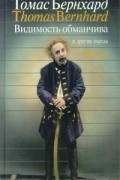
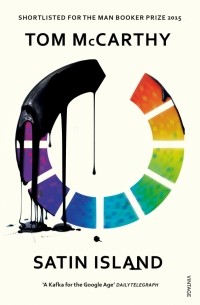
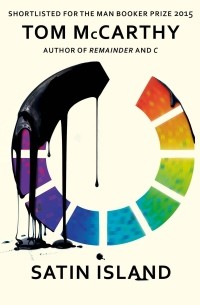
У меня заняло какое-то время найти этот роман. Несмотря на номинацию на Букер несколько лет назад, он как в воду канул: пиратские сайты им не заинтересовались, а библиотека, почувствовав спад интереса, уже от него избавилась. Впрочем, охота на этот текст - вполне в духе самой книги. Шикарный (и короткий) роман-мистификация.
Антрополог работает на некую фирму. Чем он занимается - неясно, но руководство им довольно. В момент между проектами он сидит в аэропорту Турина, застряв там на несколько часов, читает новости и пытается увязать воедино категории, в которые эти новости попадают: разливы нефти, несчастные случаи с парашютистами, культ карго, воздействие йода на рак щитовидки, - всё, несомненно, является частями одной большой системы, такой же большой, как сама жизнь. Однако, какую пользу это приносит компании? Ничего не ясно.
В общем, книга обо всём и ни о чём в частности. Люблю такое.

Вынуждена признать, что это действительно очень странная книга. И я согласна с мнением Daily Telegraph - очень кафкианская. Главный герой, U., - антрополог, работает в огромной корпорации, спит с некой весьма интересной женщиной, читает все, что читается и систематизирует все, даже то, что не поддаётся на первый взгляд систематизации. Его внимание цепляется за каждую мелочь, он вообще очень внимательный и также внимательно, несколько пассивно познает действительность. Он - обозреватель, аналитик. Мы не знаем про него практически ничего. Мы вообще ни про кого толком ничего не знаем. В книге минимальное количество диалогов, которые встроены в общее повествование и никак не выбиваются из логического деления текста на пронумерованные абзацы - в этом есть что-то научное, с одной стороны, и эпическое, библейское - с другой. Это очень странная книга, мне кажется, что я до неё еще не доросла. Она взрывает мозг и хочется верить, что она в итоге займет достойное место среди прочих умных книг. Когда-нибудь я прочту ее снова. Обязательно.

They didn’t find a match, said Petr, the next time I met him. Who didn’t? I asked. The Greeks, he said; the lab. Bummer, I said. Yeah, he answered; useless fucking humming-birds. There’s one thing, though, they still want to try. What’s that? I asked. Orange juice, he told me. Apparently my cells twitched, or cringed, or did something or other, when exposed to Jaffa-orange extract. Not enough to blast them, but enough for them to want to try to flush the bad ones out with orange juice. Flush them out? I repeated. How do they do that? They inject the stuff into my veins, said Petr. They shoot you full of orange juice? I asked. Not any orange juice, he said: they have to be Jaffa oranges, from Israel and the Lebanon, or Gaza, Palestine, the Holy Land—whatever you call that part of the world now. I’ve got to go, he said a moment later, and took off; but the thought of him being filled with Middle Eastern orange juice stuck with me for a day or two. Where, before, I’d seen Grecian caves and temples, now my mind’s eye gave me hot, cracked hillsides on which orange groves were planted. Far from presenting an idyllic landscape, these hillsides and these orange groves were dotted with gun emplacements, capped with observation posts from which surrounding villages could be monitored and showered with mortars. Walls, made not of old stones but of ugly modern concrete topped with barbed wire, hemmed these groves in, cutting some of them in two. Beneath them, and beneath the villages, down in valleys that stretched as far as the eye could see in every which direction, oil wells burned, their smoke-plumes blackening the sky—and blackening the orange groves as well as they drifted across these, leaving tarry deposits on trees’ barks, on leaves and on the fruit itself. When that scene came to me, when I pictured all its hatred, all its violence, all its blackness, being injected into Petr, I knew—instinctively and with complete certainty—that he was going to die.

Later that evening I sat down, once more, to plot the framework of my Great Report. The clearing I’d made on my desktop was still there, untouched and un-encroached-on—save by a small, dead moth whose corpse had landed there after whatever parachute it had put its faith in had failed. I swept it aside; and, once again, the space was pristine, perfect, blank. Tabula rasa: I pronounced the words aloud as I surveyed the leather, breathing in its smell of cut grass and detergent. Just sitting before it, above it, filled me with a sense of infinite possibility. I pictured myself as an industrialist, viewing a clearing in the forest where his factory would go; or as an urban planner, given carte blanche to design from scratch a new, magnificent cosmopolis; a mathematician, a topologist or trigonometrist, contemplating space in its most pure and abstract form; an explorer, sea-discoverer, world-conqueror from centuries gone by, standing at his prow as his dominion-to-be hove into view: this virgin territory that he would shape after himself and make his own. Placing my laptop in the middle—the exact, geometric centre—of this clearing, I opened a fresh document and stretched its borders out until it filled my screen entirely. As I did this, though, just as the document’s expanding lower boundary reached the bottom of my screen, my finger momentarily lost contact with the glide-pad; when the finger made contact again, it caused the applications docked invisibly at the screen’s base to pop up, impinging on the clean neutrality both of the screen and of my mind. Trying to hide them once more, I accidentally tapped on the docked news page, which slipped from its box, inflating as it rose, like some malicious genie, taking the screen over—and in an instant, all the extraneous clutter, all the world-debris, that I’d so painstakingly eliminated flooded back into the clearing, ruining it.


Другие издания