

This is man: a writer of books, a putter-down of words, a painter of pictures, a maker of ten thousand philosophies. He grows passion-site over ideas, he hurls scorn and mockery at another's work, he finds the one way, the true way, for himself, and calls all others false--yet in the billion books upon the shelves there is not one that can tell him how to draw a single fleeting breath in peace and comfort. He makes histories of the universe, he directs the destiny of nations, but he does not know his own history, and he cannot direct his own destiny with dignity or wisdom for ten consecutive minutes.
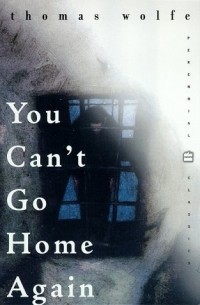
Домой возврата нет. Нет возврата домой. Нет возврата к юности, нет возврата к тому, кем ты был, потому что ты уже не тот, ты изменился, и изменился город твоей юности. Домой возврата нет.
О любимом писать труднее всего . О настолько любимом, как Томас Вулф, писать практически невозможно. О любимом так, что щемит сердце и преломляет сознание. О любимом так, что думаешь его мыслями (какой же мудрый он был) и живешь его жизнью (как же мало он прожил).
Домой возврата нет. Нет возврата, но хочется понять, проанализировать, понять, прожить. Понять что? Понять кого? Понять людей, понять историю, понять великих писателей, понять, в первую очередь, самого себя. Да, эгоцентризм модернизма, но почему бы и нет. Ведь так происходит становление, и вот он уже писатель, вот вышла первая, выстраданная, вымученная годами, "Взгляни на дом свой, ангел" и надо жить теперь уже писателем, а готов ли он к славе? И правда, та правда, которую он так долго вынашивал и которой так гордился, где она, есть ли к ней возврат?
A man learns a great deal about life from writing and publishing a book. When Webber wrote his, he had ripped off a mask that his home town had always worn, but he had not quite understood that he was doing it. Only after it was printed and published did he fully realise the fact. All he had meant and hoped to do was to tell the truth about life as he had known it. But no sooner was the thing done--the proofs corrected, the pages printed beyond recall--than he knew that he had not told the truth. Telling the truth is a pretty hard thing. And in a young man's first attempt, with the distortions of his vanity, egotism, hot passion, and lacerated pride, it is almost impossible.
Домой возврата нет. Нет возврата к любви. И теперь одиночество. Но, может быть, сейчас это именно то, что ему нужно. Быть одиноким. Одиночество - удел многих.
The lives of men who have to live in our great cities are often tragically lonely. In many more ways than one, these dwellers in the hive are modern counterparts of Tantalus. They are starving to death in the midst of abundance.
Домой возврата нет. Жить. Мыслить. И обязательно писать. Писать вторую книгу. Опять долго и трудно. И опять гениально, но уже по другому. Ведь нет возврата домой. И нет возврата к книге первой.
Already his next novel was begun and was beginning to take shape within him. He would soon have to get it out of him. He dreaded the prospect of buckling down in earnest to write it, for he knew the agony of it. It was like demoniacal possession, driving him with an alien force much greater than his own. While the fury of creation was upon him, it meant sixty cigarettes a day, twenty cups of coffee, meals snatched anyhow and anywhere and at whatever time of day or night he happened to remember he was hungry. It meant sleeplessness, and miles of walking to bring on the physical fatigue without which he could not sleep, then nightmares, nerves, and exhaustion in the morning.
Домой возврата нет.
 32 понравилось