 Ваша оценка
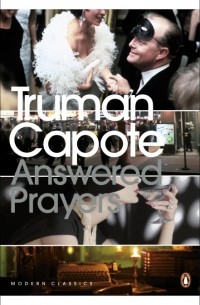
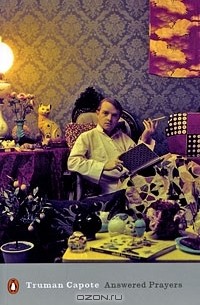
P.B. Jones is the amoral, bisexual protagonist of this unfinished novel. He discovers that bed-hopping rather than literary ability is the way to get published. He discovers along the way that prayers that are answered cause more pain than those that remain ignored.
Жанры
Рейтинг LiveLib
3,4
10 оценок
- 510%
- 450%
- 320%
- 220%
- 10%
Ваша оценкаПрочитали 11Хотят прочитать 16
Рецензии
 Contrary_Mary23 апреля 2016Читать далее
Капоте мог вести себя чудовищно цинично, сам того не замечая (и история создания "Answered Prayers" - лучшая тому иллюстрация: публикация фрагментов будущей - в итоге так и не законченной - книги привела к небывалому возмущению в светских кругах, единогласному исключению Трумена из тусовки и даже одному самоубийству), но когда он пытается быть циничным по-настоящему, ему это не очень удается. Такие уж они, эти невинные монстры, unspoiled monsters - как озаглавил Капоте первую главу этой полувымышленной, полуправдивой эпопеи о восхождении амбициозного и расчётливого хастлера, выросшего в католическом приюте в Миссури, к недоступным для большинства вершинам светского общества - и последовавшем затем трагическом низвержении. О деталях нам остается только догадываться - хотя Капоте списал половину персонажей со своих знакомых и щедро пересы́пал повествование сплетнями, имевшими хождение и в реальном мире, главная интрига, судя по всему, была по большей части вымышлена - и такой закрученной и динамичной интригой, кажется, еще ни одно произведение Капоте не могло похвастаться. Но в итоге все, чем нам остается довольствоваться - это три с половиной недлинных главы, ведущих в никуда и исполненных чудовищного ровно в той же степени, что и невинного.
Лично я сломалась на этом месте:
"That's why I drug: mere dry meditation isn't enough to get me there, keep me there, keep me there, hidden and happy with Father Flanagan and his Outcast of yids, nigs, spiks, fags, dykes, thousands, him and all the other dope fiends, and commies. Happy to be down there where you belong: Yassah, massuh! Except the price is too high, I'm killing myself." Then, scrapping the sleazy stand-up-comic tone: "I am, you know. But meeting you has made me change my mind. I wouldn't object to living. Provided you lived with me, Jonesy. It means risking a cure; and it is a risk. I've done it once before. At a clinic in Vevey; and every night the mountains collapsed on me, and every morning I wanted to drown myself in Lac Léman. But if I did it, would you? We could go back to the States and buy a filling station. No, no foolin'. I've always wanted to run a filling station. Somewhere in Arizona. Or Nevada. Last Chance for Gas. it would be real quiet, and you could write stories." 5 понравилось190


















Цитаты
- Contrary_Mary23 апреля 20161 понравилось44
- Contrary_Mary23 апреля 20161 понравилось38
Подборки с этой книгой

Туфельки на обложке книг

- 708 книг
Моя книжная каша 2

- 14 841 книга
Для игр 2026

- 1 767 книг
0 Прочитать, что ли?..

- 22 170 книг
Хорошие книги, которые я прочитала в 2016 году
- 43 книги










Другие издания