
Литературоведение, литературная критика, история литературы
innashpitzberg
- 269 книг
Это бета-версия LiveLib. Сейчас доступна часть функций, остальные из основной версии будут добавляться постепенно.

Ваша оценка
Ваша оценка
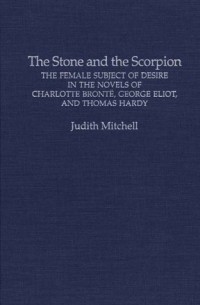
Если мое первое знакомство с феминистским направлением в литературной критике вызвало у меня нечто вроде изумленного восторга перед диковинным, неизвестным и немного странным явлением, то эта книга читалась уже совсем по-другому - с большим интересом и вполне осознанным и прочувствованным удовольствием.
Насколько я теперь понимаю, феминисткая литературная критика может очень интересно расширить представления, полученные от стандартных, или, лучше сказать, более классических направлений в литературном анализе, и я бы не советовала ее в качестве единственного взгляда на произведение, а именно в качестве дополнения. Но зато какое дополнение! Эксклюзивное, очень логичное, и в данном случае очень эротичное.
Однако будьте осторожны! Прочитав такое подробное и тщательное исследование гендерных отношений в викторианских романах, будет трудно вернуться к непосредственному восхищению этими романами, и мне кажется, что пройдет еще много времени, пока я смогу просто читать роман, не используя технику анализа подробно изложенную в этой работе.

Jane Eyre's eroticism is heightened by Brontë's profound understanding of the oedipal needs that are subsumed in the master-servant relationship, and by the enormous amount of physical touching that goes on in the novel (which no doubt fed the censure of contemporary critics and caused Brontë to retreat from such displays of physicality in her subsequent novels). Given the stock powerful male/powerless female scenario, it may seem unusual to ask whether Jane could be construed as a female subject of desire. What is even more unusual is the answer, which is "almost." She displays the look, and occasionally the language, of desire; she unabashedly feels desire; and her actions, while extremely oblique, are at least directed toward the fulfillment of this desire. Perhaps most importantly, she is not a conventional object of desire. Her character is not objectified in the way that those of most Victorian heroines are, in that she is not beautiful. She is also much less passive than many nineteenth-century heroines; basically, she has intelligently assessed the combat inherent in the domination/submission relation, and plays to win, yielding to her passions (and Rochester's) only when she knows her future is secure. Jane Eyre is the impossible dream, the Cinderella story, with some important differences.

How then can we account for the fact that George Eliot's novels comprise a corpus that fairly exudes eroticism? My search for a female subject of desire in this corpus reveals a traditional George Eliot but not necessarily a patriarchal one; her repression of female desire is simply a part of her overall sexual repression, which is extreme in its thoroughness and monumental in its effects. The eroticism of Eliot's novels is not (at least not directly) generated by the interplay of forces within the domination/submission hierarchy. It derives instead from the sheer force of Eliot's effort to avoid acknowledging such a dynamic. Such avoidance, so scrupulously adhered to--expunged even from the tacit contract between narrator and reader--acquires the force of a ruling obsession, suggesting its opposite in a peculiarly insistent way. This observation is hardly new--it forms the basis for much traditional Victorian criticism--but it is worth noting that in George Eliot's work such erotic avoidance attains a sort of perfection that makes her unique in even the most repressive of centuries.

The murky message of this concatenation of events, that a woman has no choice but to wait for her love to be returned (and that she may die if it is not), is revised in Villette in the only way possible. With the insight of more modern feminists, Charlotte Brontë confronts the issue of female desire in a wholly realistic way, rejecting the unhealthy domination/submission hierarchy in favor of a more equal partnership. It is still the case, within the ethos of Villette, that a woman can die for want of a man's love; but it is also true that she can choose to seek sustenance elsewhere.
In order to do this, however, she must jettison her need to submit to the male as well as her idolization of him. With amazing acuity, Brontë has Lucy do this in the enactment of a psychological ritual reminiscent of a funeral, in exactly the same way that modern therapists advocate to mark the conclusion of the grieving process.